In today’s rapidly evolving manufacturing landscape, laser technology has emerged as a revolutionary force, transforming how businesses mark, engrave, and cut materials with unparalleled precision. Whether you’re a startup exploring new production methods or an established company seeking efficiency upgrades, understanding laser technology is crucial. This comprehensive guide will introduce you to the fundamental concepts, working principles, and key differences between laser marking and cutting machines – essential knowledge for anyone considering implementing this advanced technology in their operations.
What is Laser Marking? Understanding the Basics
Laser marking is a sophisticated process that uses concentrated beams of light to create permanent marks on various material surfaces. Unlike traditional printing or engraving methods, laser marking doesn’t involve physical contact with the material, eliminating tool wear and contamination risks. The process works by altering the surface properties of the material through carefully controlled heat application, resulting in high-contrast, precise markings that won’t fade, smear, or wear off over time.
Common applications of laser marking include:
- Product identification (serial numbers, barcodes, QR codes)
- Branding (logos, company names)
- Regulatory compliance marks (certification logos, safety information)
- Decorative designs and aesthetic enhancements
- Traceability codes for inventory management
The versatility of laser marking allows it to work with diverse materials including metals, plastics, ceramics, glass, and even organic materials like wood and leather. This flexibility makes it invaluable across industries from medical device manufacturing to automotive parts production and consumer goods.
Laser Cutting Principle: How Does It Work?
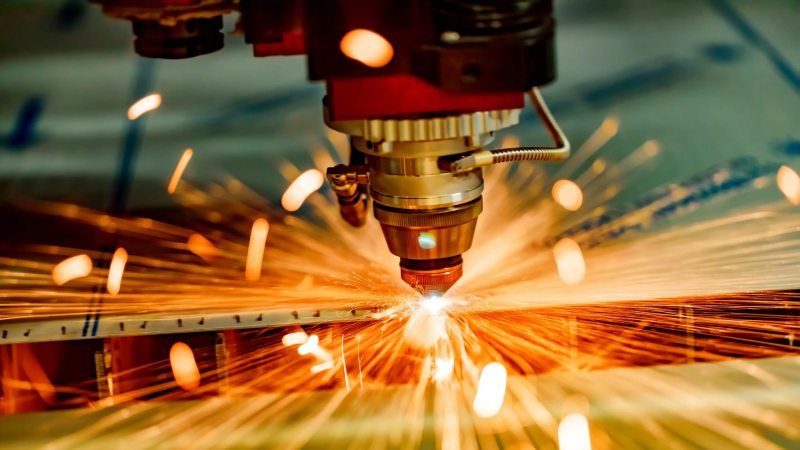
While laser marking modifies surface appearance, laser cutting takes the technology a step further by using the laser’s energy to separate materials. The fundamental laser cutting principle involves focusing a high-power laser beam onto a material surface, heating it to the point where it either melts, burns, vaporizes, or is blown away by a jet of gas, leaving an edge with high-quality surface finish.
The process typically involves these key components:
- Laser resonator: Generates the laser beam
- Beam delivery system: Guides the laser to the material
- Focusing lens: Concentrates the laser to a precise spot
- CNC system: Controls the movement and positioning
- Assist gas system: Provides gas to blow away molten material and protect the lens
Different types of lasers are used for cutting, including CO2 lasers, fiber lasers, and crystal lasers, each with specific advantages for different materials and applications. The precision of laser cutting allows for complex shapes and intricate designs that would be difficult or impossible with traditional mechanical cutting methods.
Laser Technology for Beginners: Types of Lasers Explained
For those new to laser technology, understanding the different types of lasers is essential for making informed decisions about equipment investments. The three main types of industrial lasers are:
CO2 Lasers: These gas lasers use a mixture of carbon dioxide, nitrogen, and helium. They’re particularly effective for cutting, engraving, and marking non-metallic materials like wood, acrylic, glass, paper, textiles, and leather. They’re also suitable for some metallic materials when properly configured.
Fiber Lasers: These solid-state lasers use optical fibers doped with rare-earth elements as the gain medium. Fiber lasers excel at marking and cutting metallic materials but can also process some plastics and other materials. They offer superior electrical efficiency, lower maintenance requirements, and longer operational lifetimes compared to CO2 lasers.
Crystal Lasers: These use nd:YAG (neodymium-doped yttrium aluminum garnet) or nd:YVO (neodymium-doped yttrium orthovanadate) crystals as the gain medium. They’re similar to fiber lasers in their applications and are effective for both metal and non-metal processing.
Each laser type has distinct advantages depending on your specific material processing needs, production volume, and budget considerations.
Key Differences Between Laser Marking and Cutting Machines
While both technologies use concentrated light energy, laser marking and cutting machines differ significantly in their applications, power requirements, and technical specifications:
Purpose and Depth: Laser marking alters the surface appearance without penetrating through the material, while laser cutting completely separates materials by cutting through them.
Power Requirements: Marking typically requires lower power (often 20W-100W), while cutting demands higher power (from几百瓦 to several kilowatts) depending on material type and thickness.
Speed and Throughput: Marking operations are generally faster for surface applications, while cutting speed varies based on material thickness and complexity of the path.
Software Requirements: Both require specialized CAD/CAM software, but cutting machines need more sophisticated path planning and nesting capabilities for material optimization.
Cooling Needs: Higher-power cutting systems typically require more robust cooling systems, often with chillers, while marking systems may use simpler air or water cooling.
Understanding these differences is crucial for selecting the right equipment for your specific manufacturing needs.
Why Choose Synmark Laser for Your Laser Technology Needs?
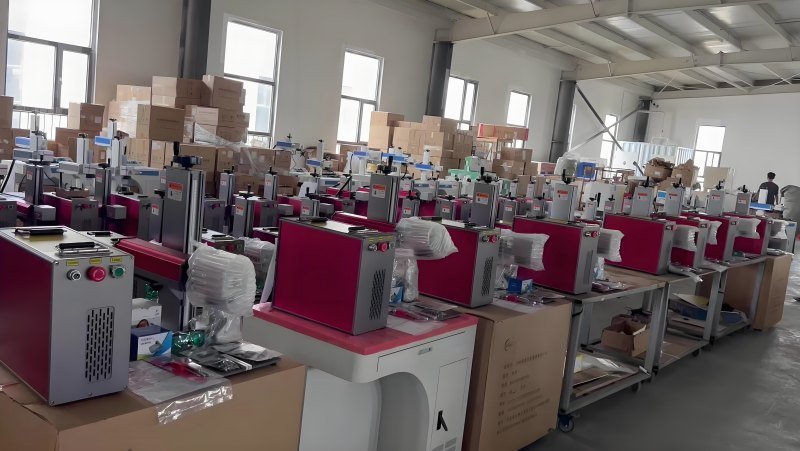
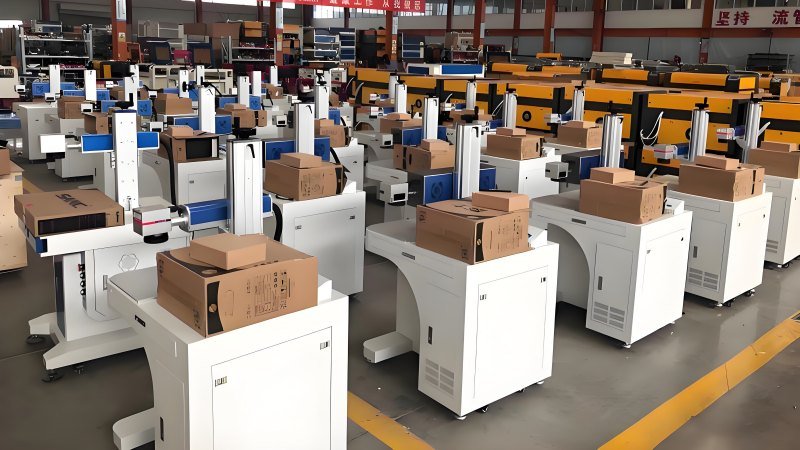
At Synmark Laser, we specialize in providing high-quality laser marking and cutting solutions tailored to businesses at every stage of their growth journey. Our expertise spans decades, combining technical innovation with practical manufacturing knowledge to deliver equipment that exceeds expectations.
Comprehensive Solutions: We offer a complete range of laser systems, from entry-level machines perfect for those new to laser technology to advanced systems for high-volume production environments.
Expert Guidance: Our team of laser technology specialists provides unparalleled support, helping you select the perfect system for your specific materials, applications, and production requirements.
Quality Assurance: Every Synmark Laser machine undergoes rigorous testing to ensure reliability, precision, and longevity, backed by comprehensive warranties and support services.
Training and Support: We provide extensive training resources and ongoing technical support to ensure your team can maximize the potential of your laser investment.
Customization Options: Understanding that every manufacturing operation has unique needs, we offer customization options to tailor our equipment to your specific processes.
Applications Across Industries: Transforming Manufacturing
Laser technology has found applications across virtually every manufacturing sector:
Medical Device Manufacturing: For precise marking of surgical instruments, implants, and medical equipment with unique device identifiers (UDIs) and other regulatory requirements.
Automotive Industry: For part tracing, VIN engraving, component identification, and precision cutting of interior elements.
Electronics and Semiconductor: For marking PCBs, micro-components, and cutting delicate electronic materials.
Jewelry and Luxury Goods: For intricate designs, personalization, and precision cutting of precious materials.
Aerospace: For part tracing, component identification, and cutting lightweight composite materials.
Promotional Products: For personalized items, corporate gifts, and branded merchandise.
The adaptability of laser technology continues to unlock new applications as materials and techniques evolve.
Getting Started with Laser Technology: Implementation Considerations
For businesses considering adopting laser technology, several factors deserve careful consideration:
Material Compatibility: Assess which materials you need to process and ensure the laser technology you choose is optimized for those materials.
Production Volume: Determine your throughput requirements to select a machine with appropriate speed and automation capabilities.
Space Requirements: Evaluate your facility’s space constraints and utility connections (electrical, air compression, exhaust ventilation).
Operator Training: Plan for comprehensive training to ensure safe operation and maximum utilization of your equipment’s capabilities.
Regulatory Compliance: Understand any industry-specific regulations that might affect your marking or cutting requirements.
Future-Proofing: Consider how your needs might evolve and select equipment that can grow with your business.
The Synmark Advantage: Partnering for Success
Choosing Synmark Laser means more than just purchasing equipment – it’s entering a partnership focused on your manufacturing success. We stand out through:
Proven Expertise: With years of industry experience, we understand the practical challenges manufacturers face and design our equipment accordingly.
Ongoing Innovation: We continuously invest in research and development to incorporate the latest technological advancements into our solutions.
Global Support Network: Our customers benefit from responsive technical support and readily available spare parts, minimizing downtime.
Cost-Effectiveness: We deliver premium performance at competitive price points, ensuring excellent return on investment.
Sustainable Solutions: Our energy-efficient systems help reduce your environmental footprint while lowering operating costs.
Next Steps: Exploring Your Laser Technology Options
As you consider implementing laser technology in your operations, we invite you to experience the Synmark difference firsthand. Our team is ready to:
- Conduct a detailed assessment of your specific application requirements
- Provide material testing services to demonstrate capabilities
- Offer customized quotations tailored to your needs and budget
- Arrange live demonstrations at our showroom or your facility
- Connect you with existing customers for reference stories
The transformative potential of laser technology is within your reach. Whether you’re looking to enhance product identification, improve cutting precision, or expand your manufacturing capabilities, Synmark Laser has the expertise and equipment to support your goals.
Contact us today to schedule a consultation with our laser technology specialists. Let us help you navigate the exciting world of laser marking and cutting machines and find the perfect solution to drive your business forward. Send your inquiry now to discover how Synmark Laser can become your trusted partner in manufacturing excellence.